
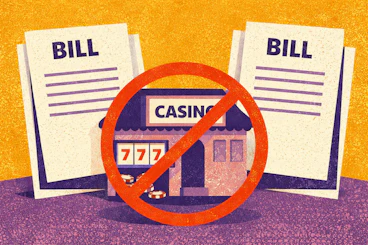
Maryland Just Moved to Crush Sweepstakes Casinos - and the Senate Is Next

Key Facts
- HB 295 and HB 1226 both passed the Maryland House and are both now scheduled for Senate hearings this week.
- Both bills passed with broad House support for a tougher anti-sweepstakes posture.
- The bills would treat sweepstakes-style casino & sportsbook products as illegal online gambling and create harsh penalties - including jail.
- Maryland’s framework would also reach beyond operators to payment providers, affiliates, and other support businesses that knowingly help illegal online gambling activity
The House just gave Maryland’s anti-sweepstakes push real momentum
Maryland’s House has now advanced two separate but complementary bills aimed at shutting down sweepstakes sportbooks and online casino activity in the state.
HB 295, titled Gaming - Prohibition on Interactive Games and Revenue From Illegal Markets, would prohibit operating, conducting, or promoting certain interactive games and would also require Maryland gaming licensees and applicants to disclose business relationships with entities known to support those markets.
HB 1226, the Maryland Illegal Online Gambling Enforcement Act, goes broader, creating a dedicated enforcement framework for illegal online gambling. Both are now in the Senate after clearing the House.
HB 295 passed 105-24 on March 20, while HB 1226 passed the House 135-1 on March 23.
Those are not close calls, and they strongly suggest Maryland is not treating sweepstakes gambling as a fringe policy issue anymore. At this stage, the question is how far the Senate is willing to go in giving regulators and prosecutors tools to attack it.
What HB 1226 would actually do
HB 1226 would prohibit a person from knowingly operating, offering, conducting, engaging in, or promoting illegal online gambling in Maryland, and it also bars knowingly supporting that activity directly or indirectly.
The bill does not apply to businesses already licensed under Maryland law to offer online sports wagering or fantasy competitions. It authorizes the Attorney General, through the Consumer Protection Division, and local prosecutors to issue cease-and-desist orders and seek court action. The Attorney General would also be required to maintain a public list of operators and website URLs that have received those orders.
The penalty language is substantial. A first violation of the core prohibition would carry up to three years’ imprisonment or a fine of up to $50,000, or both. Subsequent violations could bring up to three years’ imprisonment or fines up to $100,000. The bill also says each wager offered or accepted, and each individual promotion of illegal online gambling in the state, counts as a separate violation.
On top of that, courts would be required to order forfeiture of profits and benefits tied to violations, and gaming licensees found in violation would lose eligibility to hold Maryland gaming licenses.
Why HB 295 matters alongside it
HB 295 is narrower in structure but important in effect. The bill would prohibit operating, conducting, or promoting interactive games and would require annual reporting by certain gaming license applicants and holders of business relationships with persons known to support, operate, conduct, or promote those games.
The fiscal note says violators would be guilty of a misdemeanor punishable by up to three years in prison and fines ranging from $10,000 to $100,000, and that the State Lottery and Gaming Control Commission would have to deny or revoke licenses in covered cases.
In practical terms, HB 295 is aimed at the commercial plumbing around sweepstakes-style products. That makes it more than a simple operator ban. It is also a message to licensed gaming businesses: Maryland does not want state-approved operators, suppliers, or applicants taking money that regulators believe is tied to unlicensed online casino activity.
The state’s own enforcement posture is already visible
The Maryland Lottery and Gaming Control Agency backed HB 1226 in committee testimony and described the bill as a way to prohibit unauthorized online gambling and let the Attorney General issue cease-and-desist orders and enforcement actions against violators.
In that filing, the agency said prohibited conduct would include not only operating or promoting illegal online gambling, but also “accepting or processing a financial transaction” or “providing an online platform for gambling,” adding that support can include “financial transactions, geolocation services, gaming content, or celebrity endorsements.”
That language is the tell. Maryland is not framing this as a fight with a few offshore websites - it is defining the issue as an ecosystem problem. The state’s fiscal notes also say the Lottery and Gaming Control Agency has already sent 75 cease-and-desist letters to alleged illegal operators since May 2024, which shows this legislative push is building on enforcement activity already underway rather than starting from scratch.
Why This Matters For Bettors

For bettors, the immediate impact is mostly about access. If Maryland finishes this package, sweepstakes casinos and social sportsbook-style products available in the state could face a much tougher operating environment, and some may decide the risk is no longer worth it. That would not affect Maryland’s licensed online sportsbooks or fantasy operators, which HB 1226 expressly excludes, but it could shrink the menu of gray-market alternatives that some users have been relying on.
In states where legal online casino play is not available, sweepstakes products have filled part of the gap. These products exist because regulated access is uneven, not because users are confused about the difference. Maryland’s bills do not solve that demand problem. They simply make clear that the state intends to police one answer to it much more aggressively.
The broader industry significance is bigger than Maryland alone. HB 1226 is built to pressure support infrastructure, not just front-end brands. Payment processors, platform providers, gaming content suppliers, affiliates, and other partners are precisely the businesses risk teams pay attention to, because once states start writing them into enforcement language, the cost of staying involved rises quickly. That is often how markets change: not when one operator gets named, but when every service partner has to ask themselves whether the business is still defensible.
For the legal market, this is also a competitive story. Maryland’s regulated operators and land-based gaming interests have a clear incentive to support stronger action against products they view as unlicensed competition. That does not automatically make every sweepstakes product identical, and the sector has argued there are meaningful differences in model and consumer safeguards. But from the state’s side, the direction here is obvious: Maryland appears increasingly unwilling to leave that distinction to operator marketing copy or legal interpretation alone.
What Happens Next
The next step is the Senate. HB 1226 is scheduled for a Senate hearing on March 31, and HB 295 is scheduled for April 1. If the bills continue moving, the real focus will be whether the Senate keeps the House’s enforcement architecture intact or narrows any of the language around support services, penalties, or licensing consequences.
If Maryland enacts both bills in something close to their current form, it would put the state among the more aggressive anti-sweepstakes jurisdictions in the country. That would matter beyond state lines because service providers tend to react nationally when one state creates credible criminal, licensing, and injunction risk around the same business model.
For bettors, the most realistic near-term effect is not some overnight industry reset. It is a steadier squeeze: fewer available products, more operator exits or geoblocking, and a clearer line between Maryland’s licensed betting market and everything outside it.
Related News


Cole cut his teeth as a sportswriter in Texas, covering everything from Longhorns games to small-town Friday night lights. A lifelong bettor stuck with offshore books for over a decade thanks to Texas' slow path to legalization, he eventually found his way into the world of social sportsbooks - where he uncovered a fast-growing, community of bettors.
Today, he writes for the millions of Americans in states without legal books, helping them explore safe ways to bet without running afoul of the law.
As editor-in-chief, he aims to keep BettingScanner honest, human, and grounded in what bettors actually care about: fairness, fun, and finding your lane - even when the state won’t give you one.


