
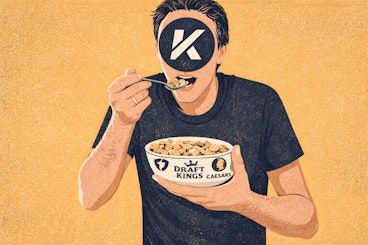
Prediction Markets Are Eating Sportsbooks’ Lunch - and What That Means for Bettors

Key Facts
- Kalshi’s estimated revenue from sports event contracts stands at roughly $1.3 billion, about 20 % of DraftKings’ projected 2026 total revenue.
- Monthly active users on Kalshi expanded from about 600,000 to 5.1 million, an 8.5× increase in roughly a year.
- While Kalshi recorded more than $1 billion in Super Bowl-related trading volume, traditional sportsbooks saw some of their lowest handle figures in key markets like Nevada.
- Shares of major sportsbook operators DraftKings and FanDuel’s parent Flutter slid significantly amid slowing sportsbook growth and widening investor focus on prediction markets.
How Prediction Markets Are Gaining Ground
For years, sportsbooks controlled the digital sports wagering ecosystem through state licensing frameworks. Access depended on geography. Taxes varied by state. Operators competed heavily on promotions and marketing because scale required regulatory approval market by market.
Prediction markets are scaling differently. Instead of launching state by state, they’ve positioned themselves under federal commodities oversight. That regulatory distinction allows them to scale on a national level, reaching users in states where sportsbooks still can’t operate.
The financial scale is now large enough to matter.
Kalshi’s sports business has reached “real competitor” size
Kalshi’s sports contracts are estimated to be generating about $1.3 billion in annualized revenue.
To put that in context, that’s roughly one-fifth of DraftKings’ projected 2026 total revenue and nearly a quarter of DraftKings’ sportsbook revenue alone. That comparison shifts prediction markets from “adjacent product” to “competitive force.”
User growth tells a similar story. Monthly active users reportedly jumped from around 600,000 to 5.1 million within a year - an expansion pace traditional sportsbooks haven’t seen since the early legalization surge.
Big-event activity is moving, even if the metrics don’t match perfectly
Prediction markets and sportsbooks don’t use identical yardsticks - trading volume isn’t handle - but the direction of travel is hard to ignore.
During the 2026 Super Bowl, Kalshi disclosed that sports-related trading volume exceeded $1 billion, a milestone reflecting both broad customer demand and the appeal of novel betting formats that extend beyond strict game outcomes.
Meanwhile, in Nevada - historically a bellwether for U.S. wagering behavior - sportsbooks handled $133.8 million in Super Bowl bets, the lowest level in a decade.
That doesn’t mean prediction markets “replaced” Super Bowl betting - plenty of people used both - but it does signal that the biggest moments in the sports calendar are no longer the exclusive domain of regulated books. When a new product can credibly claim “we did a billion around the Super Bowl,” it changes how operators, affiliates, and investors talk about the category.
Sportsbooks are feeling pressure from above and below
Meanwhile, the broader U.S. sportsbook market is showing signs of maturity. Legal markets were down 2% year-over-year in December, marking the first overall decline since 2018. In a flat or slowing market, any category capturing new users or redirecting engagement becomes more consequential.
And investors are paying attention. Shares of DraftKings fell more than 13%, while Flutter Entertainment - FanDuel’s parent company - dropped over 11% during the period in question, reflecting concern that growth assumptions may need recalibration.
Why This Matters For Bettors

The rise of prediction markets creates competitive pressure in ways that don’t show up immediately as “better odds” or “bigger promos,” but still reshape the experience. When a platform can operate nationally without navigating 30-plus separate state tax regimes, it changes the cost structure. That, in turn, affects how aggressively traditional books have to compete.
Access is the first difference most users notice.
Sportsbooks are still geographically gated - you can be a diehard bettor and still be locked out depending on the state you’re standing in. Prediction markets have leaned into a regulatory position that has allowed them to reach customers in places sportsbooks can’t, which helps explain why growth is being driven by bettors in restricted states and more sophisticated users, according to the numbers.
Then there’s the second-order effect: once a product category is big enough to credibly pull billions in annualized sports revenue and show nine-figure-to-billion activity around marquee events, sportsbooks can’t dismiss it as a niche or a novelty act. Even DraftKings’ CEO framing - that migration is mostly low-margin or negative-margin players - is effectively an admission that something meaningful is happening at the edges of the funnel.
Those “low-margin” users are often the same people who drive promo ecosystems, arb communities, and high-frequency in-play volume. If they move, the books adjust.
Then there’s the ecosystem effect. If prediction platforms continue to scale nationally while sportsbooks remain geographically restricted, pressure will build in statehouses and regulatory bodies. Lawmakers will face questions about tax equity, consumer protections, and whether two products that look similar to users should operate under entirely different regimes.
For bettors, this all means the competitive map of online wagering is being redrawn in real time. More platforms, more hybrid products, and potentially more regulatory battles that shape what’s available - and where.
What Happens Next
The next phase is already underway: sportsbooks aren’t just lobbying and waiting to see how this plays out - they’re building.
DraftKings, Fanatics and FanDuel have all launched prediction markets of their own in December and January to compete directly, including in states where they aren’t authorized to offer sportsbook betting.
That’s the tell. When the biggest operators choose to compete inside the new category instead of trying to starve it, it usually means two things are true at once: (1) the user demand is real, and (2) the regulatory outcome is uncertain enough that you’d rather be positioned than waiting on the sidelines.
The next stage likely unfolds on two fronts.
First, product convergence. Expect more sportsbooks to experiment with event contracts, trading-style interfaces, and markets that resemble prediction platforms - particularly in jurisdictions where licensing flexibility allows it.
Second, regulatory conflict. State regulators in more than a dozen jurisdictions have already challenged aspects of prediction market operations. Those cases will determine whether this remains a parallel national system or is forced closer to the state-regulated sportsbook model.
Either way, prediction markets are no longer an interesting sidebar. They’ve grown large enough to influence investor sentiment, operator strategy, and user behavior at the same time.
Related News


Cole cut his teeth as a sportswriter in Texas, covering everything from Longhorns games to small-town Friday night lights. A lifelong bettor stuck with offshore books for over a decade thanks to Texas' slow path to legalization, he eventually found his way into the world of social sportsbooks - where he uncovered a fast-growing, community of bettors.
Today, he writes for the millions of Americans in states without legal books, helping them explore safe ways to bet without running afoul of the law.
As editor-in-chief, he aims to keep BettingScanner honest, human, and grounded in what bettors actually care about: fairness, fun, and finding your lane - even when the state won’t give you one.


