
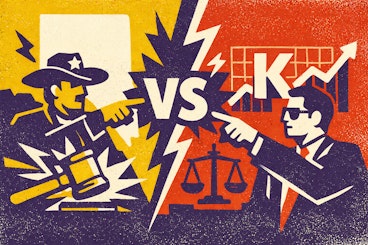
Nevada Sues Kalshi, Escalating State–Federal Fight Over Prediction Markets

Key Points
- Nevada filed suit against Kalshi, claiming its event contracts amount to unauthorized sports wagering under state law.
- Kalshi maintains its products are federally regulated derivatives under the CFTC, not gambling.
- The lawsuit intensifies a broader state–federal jurisdiction clash over prediction markets.
- Nevada sportsbooks handled $133.8 million in Super Bowl wagers this year, the lowest total in a decade.
Nevada’s Legal Challenge Against Kalshi
Nevada regulators filed suit in Carson City District Court claiming Kalshi’s sports-linked event contracts amount to illegal sports betting under state law. The complaint argues that by offering contracts tied to sporting outcomes to Nevada residents without a state gaming license, Kalshi is circumventing Nevada’s regulated sportsbook framework.
Kalshi operates as a Designated Contract Market regulated by the CFTC. It lists event contracts that allow users to buy “yes” or “no” positions on defined outcomes, with contracts settling based on whether the event occurs. While the platform has historically focused on political, cultural and economic indicators, the inclusion of sports-related contracts has intensified regulatory scrutiny.
At the center of the dispute is whether those contracts should be treated as financial derivatives under federal commodities law or as wagers under Nevada gaming statutes.
Nevada’s Position: Functional Sports Wagering
Nevada regulators contend that when a contract’s underlying event is a sporting result, and participants stake money on the outcome in exchange for a defined payout, the activity meets Nevada’s statutory definition of sports wagering — regardless of whether the product is labeled a “derivative.”
Nevada’s gaming framework is among the most mature in the country, built on strict licensing requirements, operational audits, consumer protections, and enforcement authority. The state’s position is that allowing federally regulated exchanges to offer sports-linked contracts without state licensure undermines that system.
In practical terms, Nevada regulators are asserting that structure does not override substance. If the economic reality resembles a bet, the state believes it has jurisdiction.
Kalshi’s Defense: Federal Preemption
Kalshi’s defense centers on federal preemption. As a CFTC-regulated exchange, the company argues that Congress granted the Commission exclusive authority to oversee event contracts listed on designated markets. Under this interpretation, state gambling laws cannot be applied to federally approved derivatives products.
Kalshi maintains that its contracts are financial instruments governed by commodities law, not wagers governed by gaming law. The distinction matters because CFTC oversight operates under a federal compliance regime focused on market integrity, disclosure standards, and systemic risk - not traditional gambling regulation.
The company’s position effectively asks courts to clarify whether federally authorized event contracts can be reclassified at the state level when they touch on sports outcomes.
Nevada’s Betting Market Under Pressure
This lawsuit is unfolding against a shifting market landscape. Nevada sportsbooks handled $133.8 million in Super Bowl wagers this year, the lowest total in a decade. While a single event’s handle does not define long-term trends, the decline reflects broader competitive pressures from mobile-first sportsbooks operating in other states and from alternative platforms offering event-based exposure.
The broader question extends beyond Kalshi. If prediction markets offering sports-linked contracts expand without state oversight, traditional gaming regulators risk seeing portions of betting activity migrate into federally regulated venues that do not require state licenses, tax contributions, or local compliance structures.
That tension between state-controlled gaming ecosystems and federally supervised derivatives markets is now squarely before the courts.
Why This Matters For Bettors

For sports bettors, the immediate impact comes in the form of product stability and market access. If states successfully assert authority over sports-related event contracts, platforms like Kalshi could face geographic restrictions, product limitations, or prolonged litigation that affects availability. Bettors using prediction markets as alternatives or supplements to traditional sportsbooks would face uncertainty around which contracts remain accessible.
The dispute also highlights differences in regulatory structure. Licensed sportsbooks operate under state-level consumer protection regimes that govern deposits, dispute resolution, advertising standards, and licensing oversight. Prediction markets regulated by the CFTC follow a federal commodities framework. The outcome of this case could determine which regulatory model controls sports-linked contracts in practice.
Beyond individual access, the case carries broader industry implications.
If courts ultimately side with Kalshi and affirm federal preemption, prediction markets could secure a durable legal pathway to offer sports-related contracts nationwide, operating outside traditional state gaming systems. That would permanently cement a parallel marketplace competing with licensed sportsbooks under a different regulatory regime.
If Nevada prevails, other states may pursue similar enforcement actions. That could create a fragmented landscape where prediction markets face state-by-state challenges, limiting product scope and increasing compliance costs.
The competitive backdrop is also relevant. Nevada sportsbooks handled $133.8 million in Super Bowl wagers this year, the lowest total in a decade. While handle fluctuations reflect multiple factors, state regulators are unlikely to overlook the growth of adjacent platforms offering exposure to sports outcomes outside the traditional licensing model.
At its core, the lawsuit is about classification. Whether sports-related event contracts are treated as financial derivatives or as wagers will shape the regulatory boundaries between sportsbooks and prediction markets for years to come.
What Happens Next
The case will proceed through Nevada’s court system, where questions of statutory interpretation and federal preemption will be central. Kalshi could seek to move aspects of the dispute into federal court if it argues that state enforcement interferes with federally authorized activity.
Separately, the CFTC may face increased scrutiny over its oversight of sports-linked event contracts. Any formal guidance or rulemaking from the agency would influence how similar disputes unfold in other jurisdictions.
In the near term, bettors should expect continued legal friction rather than immediate market closures. The longer-term outcome, however, could establish clearer boundaries between state-regulated sportsbooks and federally regulated prediction markets.


